Thursday, January 31, 2013

Half way to Spring

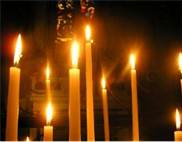
Candles at church service known as Candlemas
February 2 is Ground Hog Day but in the Christian calendar it is Candlemas Day.  Candlemas is a Christianized version of an agent pagan observance of the beginning of spring. It marked the half way point between the winter solstice and the spring equinox.

If Candlemas Day be fair and bright
Winter will have another fight.
If Candlemas Day brings cloud and rain,
Winter won't come again. - an old saying
 
 
The faithful brought their year's supply of candles to Candlemas to be blessed.  In the Roman Catholic Church it became the day that Jesus was presented at the Temple and Mary was purified after giving birth to Jesus.
 
 
In the Celtic world it is also known as  Imbolc or St. Brighid or Brighid's day. When I Googled the term and asked for images I found all kinds of Imbolc greeting card images like this one.
 
Imbolc, part of the Celtic Calendar
 
The peasants were encouraged to turn the soil and plant some seeds on Candlemas day. Here in southern Ohio, even though we are now part of planting zone 6, its a good bet the ground is still frozen on February 2, or at least too cold and wet to plant anything. You can still participate in this ancient ritual by planting a pot of basil or some other herb and placing it in a sunny window. 
 
Sprouted broccoli and purple cabbage seedlings aka micro greens
For my part I am planting a flat of micro-greens and frost seeding my pastures. The micro greens will come from all my left over 2012 seeds.  I have loads of broccoli, radish and other seeds from last year. I might as well us them up and increase the nutritional value of my green salads by adding some sprouted veg. They are quick and easy to grow in  seed starter mix in a pot on a sunny window sill.

Frost seeding the pastures is a good way to get some additional nutrition into my cattle's diet.  Legumes are recommended, mostly clovers, though rye is also considered a good choice for frost seeding. With my hand cranked seeder I can walk the small pastures (less than 3 acres) and broadcast seed and let the freeze and thaw of the February weather along with the heavy hooves of the cattle, work the seeds into the soil.  The warmer weather in March and April will sprout the seeds and hopefully help to overcome annual weed seeds left over from last year.


Tuesday, January 29, 2013

Tea at Downton Abbey

Have you noticed that they never show anyone having afternoon tea at Downton Abbey?  You see one of the Crawley's asking Carter to bring tea when a guest arrives, and there are some afternoon visits with Violet where tea is served, but you don't get the impression that food is included. 

Lunch on the lawn at the back up estate.
But then again, we get very little story line that is about their day to day activities. When someone asks Mary what she will do if she goes to America to escape the scandal with the Turkish diplomat, she replies, "The same as I do here, pay calls and receive guests", or something to that effect. You get the impression that before and after the war the Crawleys live basically useless lives.  It's only through the downstairs staff that you get the impression of any one's day to day activities.

In England, afternoon tea was meant to stave off hunger between lunch and dinner. Dinner was served about 8:00 pm and lunch anytime from noon through 1:00 pm so afternoon tea developed in the 1840's as a snack between meals.  At first it was just tea and bread and butter. I would liken it to the after school snack mother's feed their children today.

  "The difference between a formal and an informal tea are the number of guests invited, the seating arrangements, and the menu", says Suzanne von Drachenfels.

Formal teas are given for large groups of people who are expected to stand while they consume tea and little nibbles that fit on the tea saucer. On occasion a formal tea may have an elaborate menu and then tea plates and forks are provided.  Formal teas are served at 4:00 pm and guests may stay until 6:00 pm but really are expected to stay just an hour. 

Informal teas are served between 2:00 pm and 3:00 pm, meant for small intimate groups in comfortable settings. The food is similar to a formal tea, light nibbles.

High tea is not, as Americans like to stage it, a fancy formal meal.  In England high tea is served at 6:00 pm, is more like our cocktail hour with liquor being served as the main drink. The term high tea comes from the meal being served at a time " high" in the day. High tea includes cold meats, breads and other leftovers.  It is a meal for shopkeepers and laborers from England's industrial midlands who worked until 8:00 pm and then had supper.


Monday, January 28, 2013

All Those Spoons at Downton Abbey


I loved the scene where Carson the butler is teaching the new footman all about the various spoons that could be used at table at Downton Abbey. Not only would Alfred have to know the spoon's identities, but also what spoons were proper for the menu being served. For example, there are three different types of soup spoons.


Bouillon Spoon

Carson has set out the bouillon spoon as one that Alfred should know. The bouillon spoon is used when clear or jellied soup is served and can be either formal or informal.  Bouillon is considered too light for any type of dinner, either formal or informal.

Oval Soup Spoon

The oval soup spoon is used for both formal and informal occasions and is meant for a soup that includes meats and/or vegetables, grains and pastas.  Modern flatware sets often include this type of soup spoon. Even today's stainless flatware will include this type of spoon.
Cream Soup Spoon - be careful not to slurp your soup!

Both the bouillon and the oval soup spoon should not be confused with the cream soup spoon. The cream soup spoon has a larger rounded bowl, too large to fit in your mouth, and is meant to be used to sip cream or pureed soup.  This spoon is not used at a formal dinner as cream soup is considered too rich rich and heavy to start such a meal. I have a couple of stainless steel spoons in this shape but they were listed as cereal spoons - something not listed in Downton Abbey's flatware inventory.

In the book, The Art of the Table by Suzanne Von Drachenfels, the author lists fourteen types of spoons still in use today. The list begins with the iced beverage spoon which I doubt they used at Downton Abbey as the English were not found of iced drinks at the time.